




Industry
Industrial inspection
For industrial operators, OHM WORKS delivers comprehensive drone-based inspections — no production downtime, no aerial lifts, no personnel sent at height. Solar panel thermography, tank and silo monitoring, roof and façade audits, hot-spot detection on process lines: our structured HSE reports and annotated orthomosaics support both preventive and corrective maintenance plans.
- Working at height avoided
- 0
- Inspection report delivery
- 24-48 h
- Geometric XY accuracy
- < 5 cm
Applications
Solar panel thermography
Automated detection of defective modules, hot spots and string anomalies on solar farms and rooftop installations. Geolocated anomaly report delivered within 48 hours.
Equipment hot-spot mapping
Thermal mapping of electrical substations, transformers, process lines and industrial furnaces in operation. Early defect detection before failure — predictive maintenance.
Tanks, silos & vessels
High-resolution visual inspection and geometric control of storage tanks, silos and industrial vessels. Detection of corrosion, deformation and tightness defects without shutdowns.
Roofs & façades — no lifts
Complete audit of industrial roofs, cladding and tall façades. No scaffolding, no aerial lifts, no operational downtime — guaranteed HSE compliance.
Steel structures & engineering works
Detailed inspection of steel frameworks, bridges, water towers and industrial chimneys. Detection of cracks, deformation and critical corrosion points.
HSE reports & predictive maintenance
Structured deliverables for your preventive maintenance plans and HSE audits. Annotated orthomosaics, 3D models, GIS exports, geo-referenced high-resolution photos.
Our method
A proven three-step protocol, from technical brief to delivery of usable data.
- 01Step 1
Technical brief & SORA analysis
Scoping with your maintenance team: type of installation, anomalies to detect, operational constraints (ATEX zone, height, access). SORA risk analysis if near sensitive installations, ANAC / DGAC authorisation within 5 days.
- 02Step 2
Multi-sensor acquisition
Drone flight by certified pilot, high-resolution RGB sensors (GSD ≤ 1 cm/px), radiometric thermal (5 cm/px) and LiDAR if 3D modelling is required. No production downtime, no personnel at height.
- 03Step 3
Analysis & HSE report
Photogrammetric and thermal processing, AI-driven anomaly detection, centimetric geolocation. Structured PDF report + GeoTIFF orthomosaics + 3D model if applicable. Delivery within 24 to 48 hours.
FAQ · Frequently asked
The questions we hear most often.
What types of drone inspection do you do?
Photovoltaic panel thermography, industrial roof audit, tank and silo control, built structure inspection (façades, building tops), HSE audit of hard-to-reach zones. Always without cherry picker, without rope access.
What exactly does photovoltaic thermography detect?
Defective modules (hot spots), open or short-circuited strings, localised soiling, partial shading, DC connection defects. We precisely locate each anomaly on the orthophoto and quantify the associated production loss.
Do you inspect roofs without climbing on them?
Yes, that's precisely the drone's value. We capture in high-resolution photogrammetry, generate the textured 3D model, and identify defects (cracks, lifts, leaks, degraded waterproofing) without fall risk for operators.
Does the drone work in all weather?
Steady wind up to 40 km/h, moderate rain for certain waterproof sensors. Thermography requires clear sky conditions for usable thermal contrast. We plan missions within favourable weather windows.
What report format for preventive maintenance?
Structured PDF report by anomaly with criticality, georeferenced location, annotated photo and intervention recommendation. GeoJSON export for CMMS integration. Temporal comparisons possible between successive campaigns.
Go deeper
Read the related technical article.
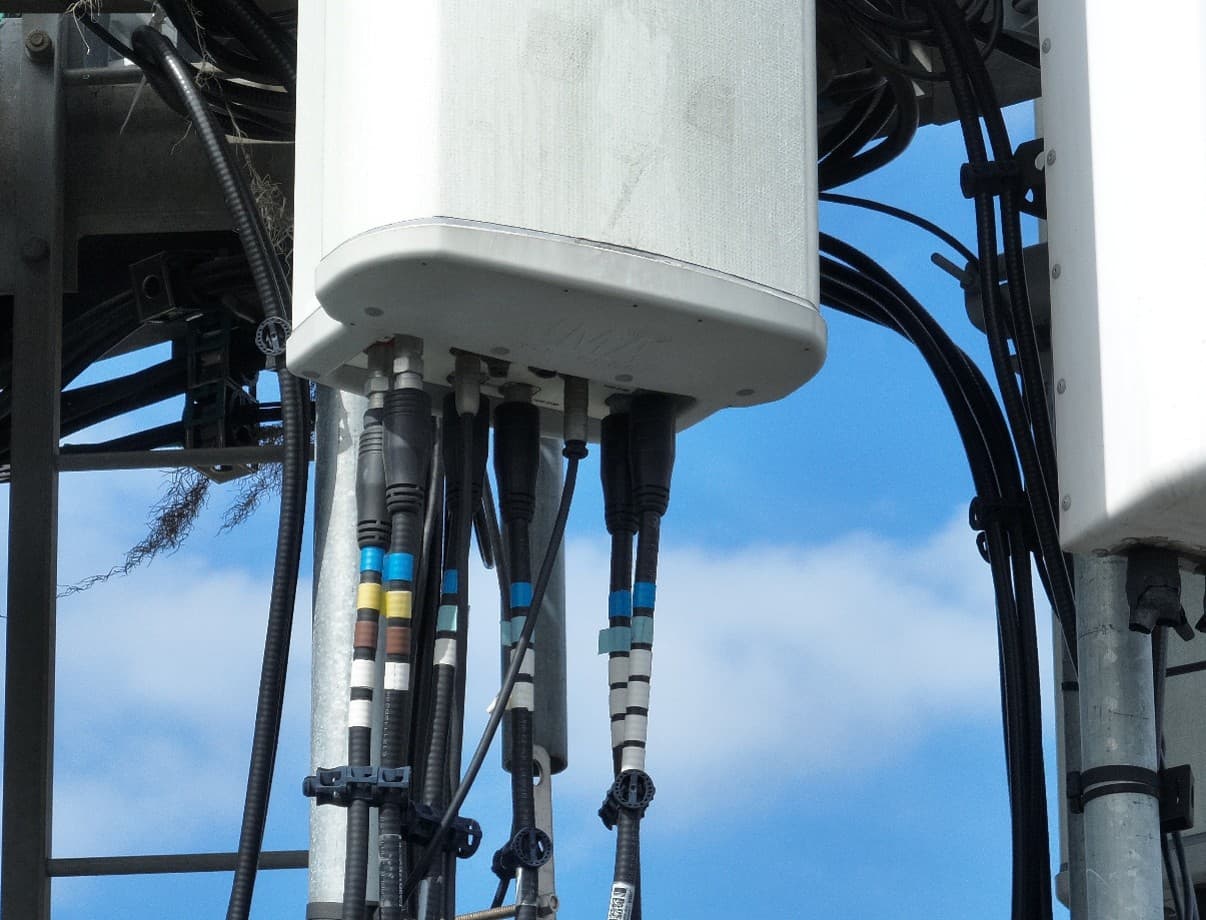
Telecom · Inspection
Telecom tower inspection by drone: 30 minutes vs a full climber day
Complete capture of a tower in a single session, no radio shutdown, no climber, no cherry picker. Cost-time-risk comparison vs the classic method, and what we document down to the bolt.